
There is no single “best month” for every Vietnam itinerary. Vietnam stretches from temperate northern mountains to tropical southern regions, so weather can be very different in Hanoi, Hoi An and Phu Quoc during the same week.
Vietnam Weather at a Glance
| Region | Often Favourable Periods | Weather Considerations |
|---|---|---|
| North Vietnam | Spring and autumn are popular for many routes | Cooler winters; hot, humid and wetter summer periods |
| Central Vietnam | Many coastal areas are attractive from late winter through summer | Rain and storms can become more important later in the year |
| South Vietnam | December to April is typically drier | May to November is warmer, humid and wetter, with frequent showers |
These are broad planning patterns, not guarantees. Weather varies by destination, year and day. Check live local forecasts before travel.
Northern Vietnam: Hanoi, Ha Long Bay, Ninh Binh, Sapa and Ha Giang
Northern Vietnam has some of the country's strongest seasonal variation. Hanoi can feel cool and misty in winter, while summer becomes hotter, more humid and wetter. Mountain areas such as Sapa and Ha Giang can be significantly cooler than Hanoi.
Hanoi
Vietnam Tourism describes April to June and September to December as favourable periods for Hanoi, with September to November particularly attractive for cooler temperatures and clearer skies. June to August is hotter, humid and rainy, while late December to March can feel surprisingly cold.
Ha Long Bay and Lan Ha Bay
For Ha Long Bay, Vietnam Tourism highlights April to June and September to November as periods with a better chance of pleasant conditions. Winter can be cool and misty; summer can be hot, humid and storm-prone. Severe weather may occasionally affect cruise operations, so flexibility matters when a cruise is central to your itinerary.
Sapa and Ha Giang
Mountain travel deserves its own forecast check. Sapa can be chilly and misty from December to March. Vietnam Tourism describes late April and early October as especially attractive periods for Sapa, with spring flowers and autumn rice-field colour among the seasonal highlights.
Central Vietnam: Hue, Da Nang, Hoi An, Phong Nha and Nha Trang
Central Vietnam cannot be treated as one simple weather zone. The coast, heritage cities and highlands experience different patterns, and the wetter season can arrive later than in other parts of the country.
Hoi An and Da Nang
Vietnam Tourism describes February to August as generally warmer and sunnier in Hoi An, while September to January is wetter and cooler. March to May is a particularly useful planning window for travellers who want to combine heritage, countryside and coastal time. June to August can still work well if you are comfortable with stronger heat.
Hue
Hue is generally warmer and sunnier from March to August, while September to February can be cooler and wetter. Heavy rain and occasional flooding are more relevant later in the year, so itinerary flexibility becomes important.
Nha Trang
Nha Trang has a comparatively short rainy season. Vietnam Tourism describes January to August as generally hot and sunny, with wetter conditions more common from September to December.
Southern Vietnam: Ho Chi Minh City, Mekong Delta and Phu Quoc
Southern Vietnam stays warm for most of the year. The main distinction is usually between the drier and wetter periods rather than hot and cold seasons.
Ho Chi Minh City and the Mekong Delta
Vietnam Tourism describes December to April as the clearer and drier period, while May to November is hotter, more humid and wetter. Rainy-season travel is still possible: showers are often concentrated into parts of the day rather than automatically meaning continuous rain from morning to night.
Phu Quoc
Phu Quoc has its own island weather pattern. Vietnam Tourism identifies October to June as the generally clearer period, while July to September is more storm-prone, hot and humid. For travellers planning a beach-heavy itinerary, Phu Quoc should be checked separately from Ho Chi Minh City.
Which Months Work Well for a North-to-South Vietnam Trip?
If your goal is to combine North, Central and South Vietnam in one journey, March to May is a useful starting point because official Vietnam Tourism guidance describes this period as broadly favourable countrywide. However, the exact route still matters. A March itinerary focused on Hanoi and Hoi An may behave differently from a May itinerary ending in Phu Quoc.
For many travellers, the smarter question is therefore not “What is the best month for Vietnam?” but:
- Which destinations are most important to me?
- Do I prioritise beach weather, mountain scenery, culture or cruising?
- How flexible are my dates?
- Am I comfortable travelling during wetter periods if crowds or prices may differ?
Is August a Good Time to Visit Vietnam?
August can still be a worthwhile month, but it requires destination-specific planning. Northern Vietnam is typically hot, humid and wetter; Central Vietnam can remain warm and suitable for many coastal itineraries; Southern Vietnam is in its wetter period. Mountain and island conditions should be checked individually.
If you are travelling in August, use seasonal patterns only as a planning guide and check current local forecasts close to departure. Weather-sensitive activities such as cruises, mountain routes and boat excursions should retain some flexibility.
What Should You Pack?
- Light, breathable clothing for warm and humid destinations.
- A compact rain layer or umbrella during wetter periods.
- A warmer layer for northern mountain areas and cooler winter travel.
- Comfortable walking footwear with reliable grip.
- Sun protection for beach, city and cruise days.
Plan Weather Around Your Route, Not the Other Way Around
Vietnam is a year-round destination because there is usually somewhere in the country with favourable travel conditions. A good itinerary matches the season to your priorities instead of applying one weather rule to every destination.
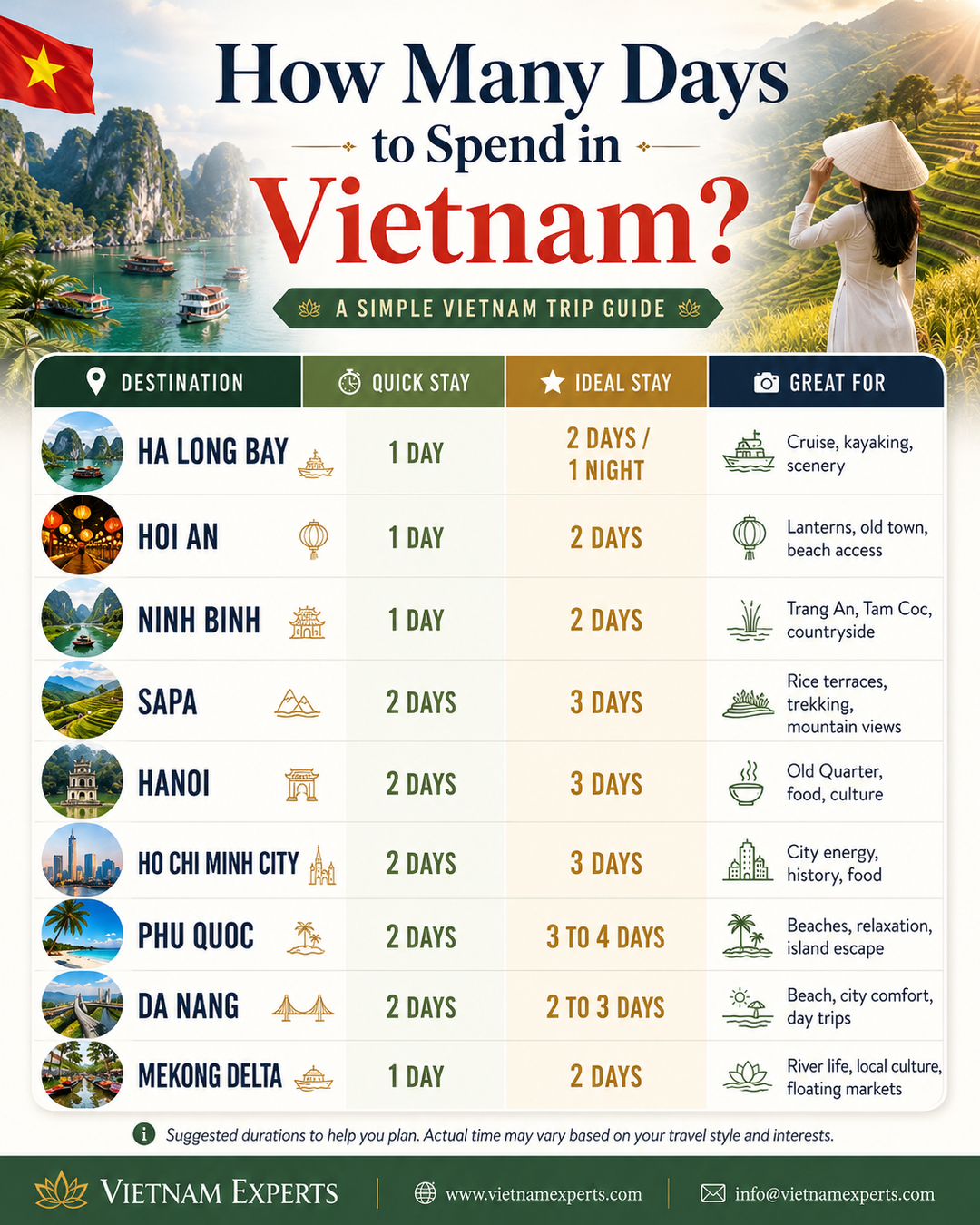
If you are still deciding how long to stay in each stop, read our guide to how many days to spend in Vietnam.
Official planning reference: Vietnam Tourism — Weather and Climate in Vietnam.
Tell Vietnam Experts your travel dates, number of travellers and the places you want to experience. We can help you shape a personalised route around your season and travel style.